Two different jobs get sold as one in Houston. Cleaning the ducts is one of them. Opening the sealed side of the system — coil, blower, anything sprayed inside it — is the other, and Texas licenses that one. This site connects you with an independent duct and dryer vent cleaning contractor working your part of the metro, publishes the price ranges a real job runs, and is explicit about where the first job ends.
Houston Duct Pros is a referral service. It neither performs nor offers to perform duct cleaning or HVAC work. The cleaning itself is done by an independent contractor trading under their own name, and any work inside the sealed part of the system is done by a Texas-licensed HVAC contractor under their own license number — which is why none appears on this site.
Everything between the supply plenum and the register faces, and everything between the return grilles and the air handler intake, cleaned by source removal: the system under negative pressure, agitation down every run, debris pulled out through the return. Plus the dryer vent, from the transition duct behind the machine to the hood on the wall or the cap on the roof.
Texas rule 16 TAC §75.100 draws the line. The moment a job opens the air handler, cleans the evaporator coil or the blower wheel, cuts an access opening in a plenum, touches wiring, or applies a disinfectant, anti-microbial or “sanitizer” inside the ductwork, it is air conditioning contracting and it needs a licensed contractor. A duct crew that offers those things is offering something it may not sell.
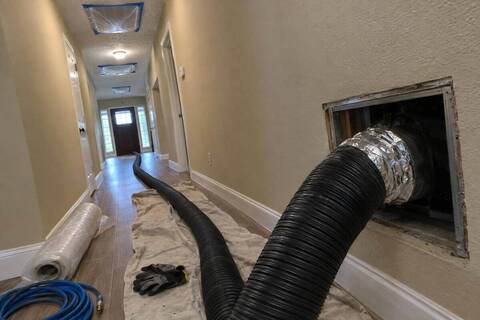
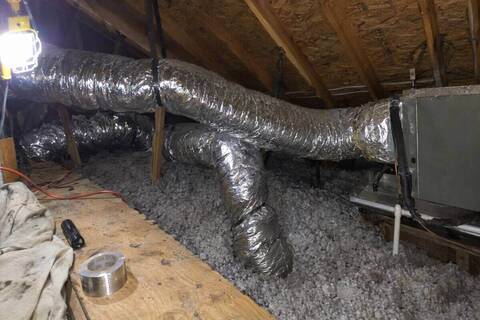
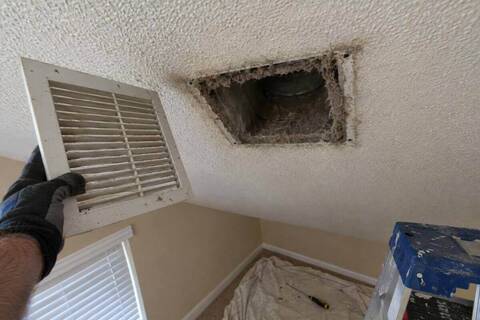
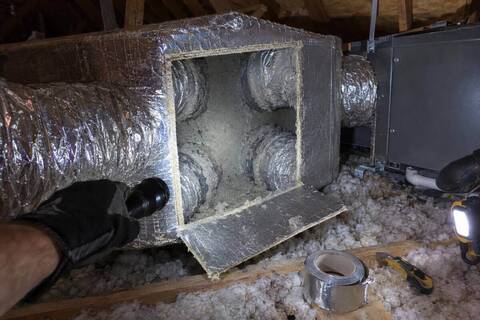
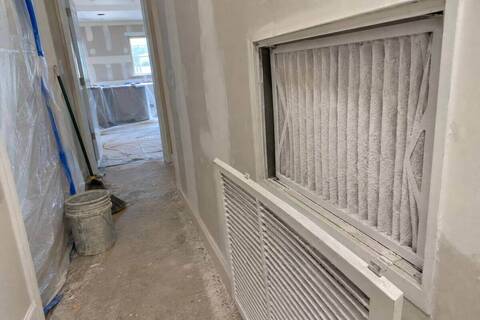
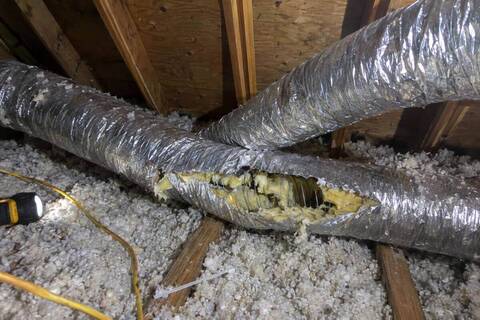
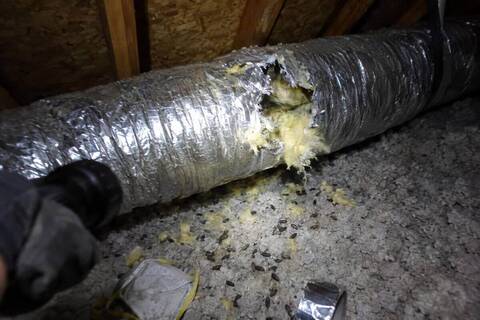
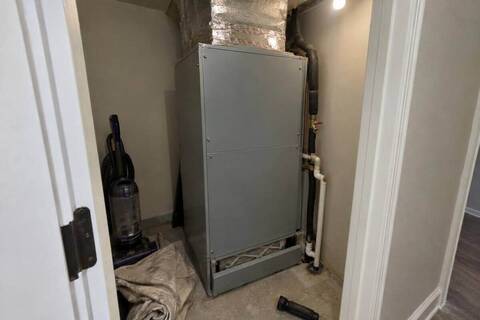
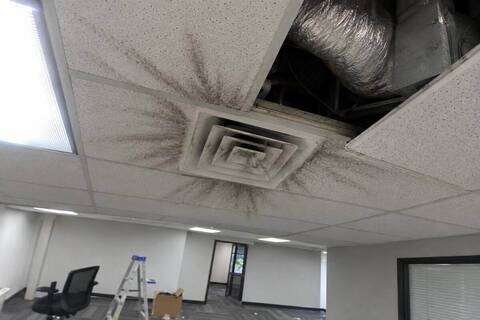
Every supply run, every return, the plenums and the trunk lines, under negative pressure, four to seven hours for a typical house. The job the price ranges on this site describe. What it involves.
The boots, the grilles and the last few feet of each run — where the dust you can actually see lives, and where the $99 jobs stop. Where the visible dust comes from.
The ductboard boxes on top of the air handler and the main trunks feeding the branch runs. In a Houston attic, that is where the debris settles. The part nobody photographs.
Drywall sanding dust is fine enough to pass a builder’s filter and settle the length of every run. The one case where nearly everyone agrees cleaning is warranted. Remodel and new-construction dust.
Flex duct lasts fifteen to twenty-five years. Past that, or after it has been wet, cleaning is the wrong purchase. How to tell which you have.
Droppings, nesting and chewed jackets. Cleaning is part of the answer; the hole is the rest of it. What a contaminated run needs.
A separate cluster, deliberately. A dryer vent is a fire-safety item with its own symptoms and its own failure points, and in Houston it very often runs to the roof. It is also the smaller ticket that most often uncovers the larger one.
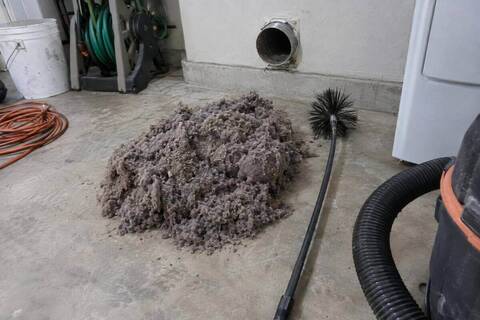
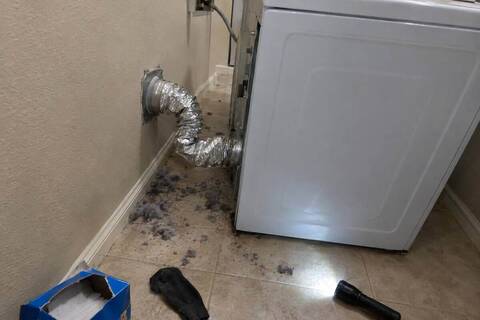
Transition duct, wall run, termination. Lint is what dryers make, and a run that has never been brushed is holding years of it. The dryer vent job.
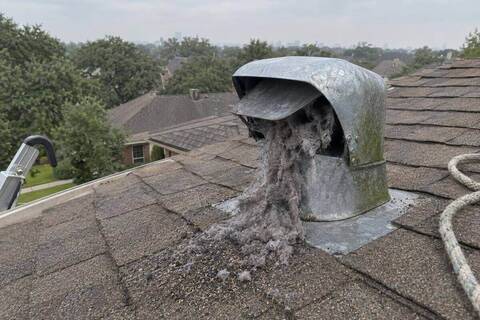
Two-story Houston floor plans put the laundry in the middle of the house and vent it through the roof: twenty-plus feet, two elbows and a cap that clogs. Why roof vents fail first.
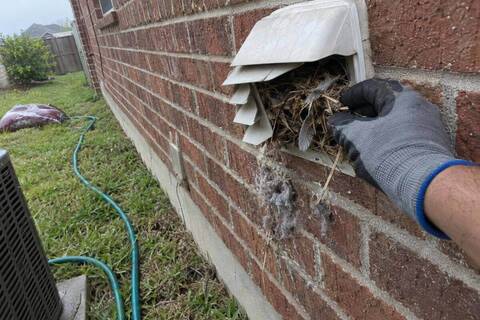
A jammed damper, a nest behind the louvers, a screen that traps lint. The termination is where most of the trouble starts. Hoods, caps and guards.
The single most common symptom, and the one homeowners blame on the dryer. Usually it is the vent. How to tell before you call anyone.
Dental and medical suites, salons, small offices, restaurant dryer and laundry vents — and the boundary with kitchen exhaust, which is a different trade. Commercial duct and vent work.
The EPA does not recommend routine duct cleaning, and this site agrees with it. There are five situations where cleaning is clearly warranted. Check yours first.
Dust blowing from a register, a remodel just finished, a dryer taking two cycles, something living in the attic. The symptom and the part of the metro are what get this moving.
Nobody covers Katy and Baytown from one truck. Coverage here is assigned across seven zones of the metro, and your inquiry goes to one contractor working yours, not into a bidding pool.
Systems counted, supplies and returns counted, what is included, what is a licensed add-on quoted separately, how long it takes. Compare it to the checklist on this site.
If the honest answer is that a filter change and a register wipe-down will do, that is the answer you should get. A written scope you can walk away from is the whole point of getting one.
Katy to Baytown is sixty miles across the city. Every address in the five-county metro is covered; the pages below exist because the housing stock in each part of it tells a different duct story — a 1970s ranch in Sharpstown on its original metal trunk, a 2007 two-story in Cypress on first-generation flex, a Meyerland rebuild that has been through three floods.
Katy, Cypress, Jersey Village, Tomball
Spring, Klein, The Woodlands, Conroe
Kingwood, Humble, Atascocita
Pasadena, Deer Park, Baytown
Pearland, Friendswood, League City, Clear Lake
Sugar Land, Missouri City, Richmond, Fulshear
Heights, Bellaire, West U, Meyerland, Memorial
The honest answer is that it has not been shown to. The EPA’s position is that duct cleaning has never been demonstrated to prevent health problems, and that it recommends cleaning as needed rather than on a schedule. What cleaning demonstrably does is remove what has accumulated in the ductwork — construction dust, debris from pests, years of settled material — and that is what this site sells it as. Anyone promising you a health outcome is promising something they cannot show.
Because Texas does. Rule 16 TAC §75.100 lets duct cleaning be done without an air conditioning contractor license as long as the work stays between the supply plenum and the supply grilles and between the return grille and the air handler intake, cuts nothing, changes no wiring, and disassembles only removable grilles. Coil cleaning, blower cleaning, cut-in access panels and any disinfectant or anti-microbial applied inside the system are licensed work. A quote that bundles both without saying who holds the license is the first thing to question.
Not for a whole house. At that price the visit covers one air handler’s supply registers with a vacuum and a deodorizer, and the returns, plenums and second system are either skipped or added on the driveway. A full source-removal cleaning of a typical Houston home is a four-to-seven-hour job with a truck-mounted or portable negative-air machine, and no one runs that for $99. The pricing page shows what the real ranges are.
Four to seven hours for one system in an average house, longer for two-story homes with two air handlers, which is most of the newer suburban stock. A crew that is done in ninety minutes did not clean the returns or the plenums. Duration is one of the easiest things to check on a written scope.
The symptom and the part of the metro are enough. That gets you to an independent duct and dryer vent cleaning contractor working your zone, with a written scope before anything is booked.
Call (346) 586-0541 Describe the Job Houston Duct