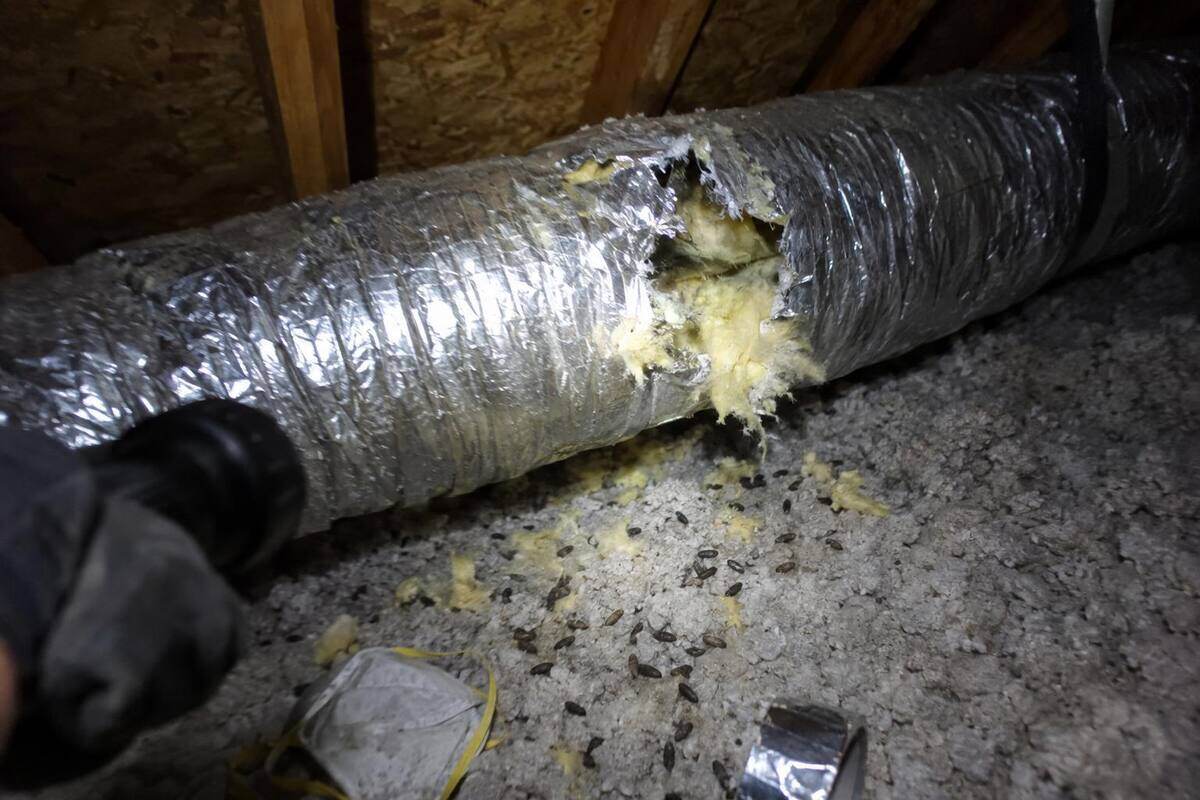
A smell that comes and goes with the air handler. Droppings on the insulation under a run. A jacket with a ragged hole in it. Houston attics are warm, dark and full of soft material, and roof rats, mice, squirrels and roaches all find the ductwork. Cleaning is part of the answer. The hole they came in through is the rest.
The first sign is usually the smell — a sweet, musty odor that is strongest when the system first starts and fades as it runs, because it is being carried out of the duct and diluted. Sometimes it is noise in the ceiling at night. Sometimes it is a register that suddenly blows less, because a run has been chewed through and is now dumping air into the attic. The EPA lists vermin infestation as one of the three situations in which it recommends cleaning, and it is the one where there is no argument about whether: what a rodent leaves in a duct is in the airstream.
Roof rats are the usual Houston culprit, and they chew flex duct jackets to get at the fiberglass for nesting. Squirrels come in through soffit and fascia gaps and do the same. Roaches use the runs as highways. Each leaves a different mess, but the sequence is the same.
First, the entry point. Cleaning a duct system while the animals still have a way in is cleaning it twice. That is pest control’s job — finding and closing the gaps at the roofline, the soffits, the plumbing penetrations — and it should be done or scheduled before the duct crew comes.
Then the cleaning, which is the full source-removal job with extra attention: every run agitated toward the vacuum under negative pressure, the plenums opened and contact-vacuumed, droppings and nesting material removed from the attic floor around the runs, and the crew in respiratory protection. A chewed run is not cleaned; it is cut out and replaced, which is a licensed HVAC repair and appears on the scope as one. If the damage is extensive the honest recommendation is replacement of the affected runs rather than a cleaning of the rest.
What is not part of the sequence is fogging. Applying a disinfectant inside the system is licensed work in Texas, the EPA registers no biocide for internally insulated duct, and a contaminated run is a case for removal of the contamination, not perfume over it.
Pest control first, or at least the sealing. Otherwise the cleaning is wasted within a season.
A small jacket tear can be taped; a hole through to the liner cannot. The run is cut back to sound duct and spliced or replaced, which is licensed HVAC work.
It is unpleasant and it is a reason to act; this site makes no health claims either way. What is certain is that what is in the run is in the air, and removing it is the cleaning’s whole purpose.
Enough chewed runs turn a cleaning into a replacement.
Where nesting material collects. Ask for the photograph.
The Livable Forest, and what a tree canopy does to an attic.
And whether pest control has been. The contractor covering your zone quotes the cleaning, names the licensed repair if a run is chewed, and does not sell you a fogging.
Call (346) 586-0541 Describe the Job Houston Duct