Of the reasons to clean ducts, this is the one the EPA, the industry standard, and every honest contractor agree on. Drywall dust is fine, abrasive, and made in quantity, and a system that ran during the sanding has it in every run and both plenums. It comes back out a little at a time for months unless it is removed.
Joint compound sands into particles small enough to pass a standard one-inch filter and settle anywhere the air slows: the boots, the sag in every flex run, the floor of the plenum. A house that was lived in during the remodel, with the system running to keep it bearable, pulled that dust through the returns for weeks. A new build is the same story with sawdust, insulation fibers and the debris of a dozen trades added, because builders run the system during finishing to dry paint and mud.
You can see it. Pull a supply register a month after the work and the boot has a white line in it. Run the system after a week of it sitting and the first minute out of the registers is visibly hazy. That is the EPA’s own trigger — ducts holding excessive debris that is released into the home — and it does not need an argument.
More time than an ordinary cleaning, and it should be quoted that way. Drywall dust cakes; it does not lift with a pass of the brush the way loose dust does, and in flex duct it sits in the inner liner’s ridges. The runs get worked twice. The plenums get opened and contact-vacuumed. The returns, which pulled most of it in, get the most attention. The filter is replaced at the end, and the crew should tell you to replace it again in a month, because what the cleaning missed will show up there.
Timing matters. Clean after the last sanding and the final cleanup, once the dust-generating work is over and the floors are in, not between phases. And cover the registers during the next project; a roll of plastic and blue tape at the start of a remodel saves this job at the end of it.
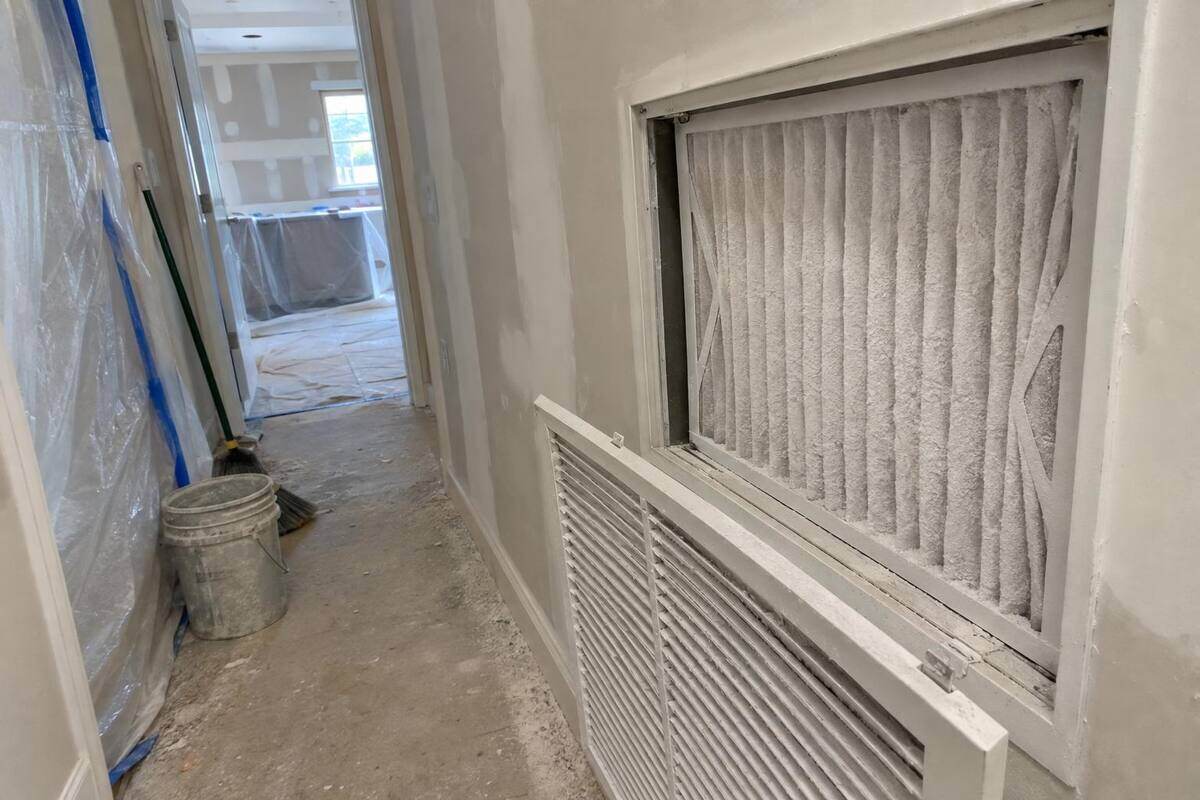
Everywhere else on this site the answer to “do I need it” is careful. Here it is not. A system that ran through a remodel or through construction needs one thorough cleaning afterward, and then, for most houses, nothing for years. The account on the checklist page started exactly here: a remodel, a genuine need, and a crew that took the money and left the dust on the floor. Which is why the useful question is not whether, but whether the job being quoted is the whole one.
A new-build owner should also ask the builder what was in the plenum when the system was commissioned. The answer is usually nothing, because nobody looked.
No. The dust does not go anywhere on its own; it sits in the sags and the plenum and sheds slowly. A cleaning now removes what is still there, which is most of it.
After. Cleaning before and then running the system through sanding puts you back where you started. Cover the registers during the work and clean once at the end.
Ask what that meant. Pull a register and look. A wipe of the grilles before the walkthrough is common; an opened plenum is rare.
Often once. If the registers blew visible dust the first weeks after move-in, that is what was in the runs. One cleaning, then nothing until a real reason comes up.
Remodel dust needs the whole job, plenums included, or it is not removed.
Remodel dust is one of five. Here are the rest, and the ones that do not hold up.
Fulshear is 92% built since 2010. That page is about this job.
It changes the quote and it changes the conversation. The contractor covering your zone quotes the longer job, in writing, and tells you when to change the filter afterward.
Call (346) 586-0541 Describe the Job Houston Duct