Dental and medical suites, salons, small offices, daycare rooms, and the dryer and laundry vents in restaurants, gyms and hotels. The same job as the residential side, on a bigger system with a different buyer, and one boundary that matters: kitchen exhaust is not duct cleaning.
Small split systems or a rooftop unit feeding a drop ceiling. Post-buildout dust from a tenant finish-out is the most common trigger; the second is a landlord’s system that has never been opened since the strip center went up.
Hair, product overspray and what forty children track in. Heavy return-side loading and a lot of small supply diffusers. A job that shows in the plenum.
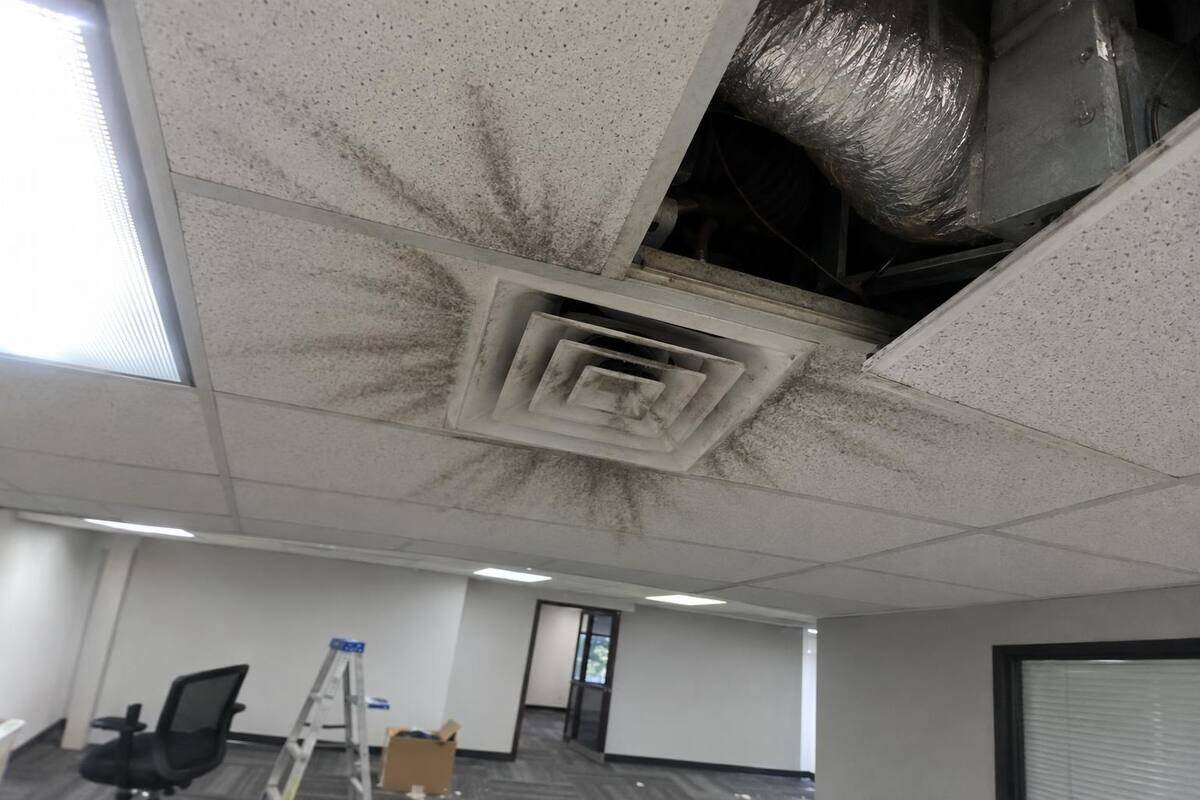
Diffuser streaks on the ceiling tiles are the visible sign. Often a landlord’s job and a lease question; the scope goes to whoever holds the HVAC obligation.
Hotel and gym laundries, restaurant linen dryers, apartment laundry rooms. Commercial dryers move more lint through longer runs, and the vent is a fire-code item. The residential page explains the job; the commercial version is the same with more of it.
A tenant finish-out is a remodel with a general contractor. Drywall dust in the runs is the same problem as the residential remodel page, at scale, and worth putting on the punch list.
Grease hood and exhaust duct cleaning in a commercial kitchen is a separate trade under NFPA 96 with its own certification, its own equipment and its own fire-code schedule. This site does not refer it. A restaurant’s dining-room HVAC ducts and its laundry vent are in scope; the hood over the line is not.
Rooftop package units instead of attic air handlers, so the plenum is on the roof and the runs come down through the deck into a drop ceiling. Drop ceilings make the runs easy to reach and the diffusers easy to drop; rooftop plenums need a ladder or a hatch. Work is usually after hours or on a closed day, and the scope is written for a property manager or an owner who wants a line item and a duration, not a homeowner’s explanation.
The license line does not move. Cleaning the runs and the plenums between the unit and the diffusers is duct cleaning. Opening the rooftop unit, cleaning its coil or blower, and any product applied inside the system is air conditioning contracting under 16 TAC §75.100, done by a TDLR-licensed contractor — usually whoever holds the service agreement on the unit. A commercial scope shows both, separately.
Pricing is quoted per job rather than from the residential table, because a 3,000-square-foot dental suite on one rooftop unit with twenty diffusers is not a house. The same drivers apply: number of units, number of openings, what is in there, and access.
Whoever holds the HVAC obligation in the lease. Most small commercial leases put routine HVAC on the tenant and the equipment on the landlord; duct cleaning usually falls on the tenant side, but check before booking.
A small suite, sometimes. A negative-air machine in a waiting room is loud, and the diffusers come down, so most jobs are after close or on a closed day.
No. Grease exhaust is a separate certified trade with its own fire-code schedule. A restaurant’s dining-room ducts and its laundry vent, yes.
For dryer and laundry vents, the contractor provides a dated invoice describing the work, which is what most inspectors ask to see. For kitchen exhaust, which this site does not cover, there is a specific sticker and certification.
Say what kind of space, how many units, and whether there is a laundry vent. A written scope comes back with duration and the licensed items separated.
Call (346) 586-0541 Describe the Job Houston Duct